




Nuclear Notes is produced by the Breakthrough Institute, and covers the policy, regulation, technology, and business of advanced nuclear energy in the United States and beyond.
Every Thursday, we track what’s really going on in the field: the new rules moving through the Nuclear Regulatory Commission, the advanced reactors moving from design to deployment, the companies going public and the utilities merging, and the executive orders and acts of Congress reshaping how the country builds. We explain not just what happened, but why it matters and how the pieces fit together.
And Then There Were Five
A fifth reactor has reached initial criticality under a rush program at the Department of Energy, induced by promising projections for energy demand, an encouraging federal government, and a rush of private money into start-ups with new engineering ideas.
“Initial criticality,” sometimes referred to as zero-power testing, means that the core achieved sustained, controlled fission, although at a power level measured in kilowatts of heat, not megawatts of electricity. It is useful in validating a design and providing performance data needed for licensing.
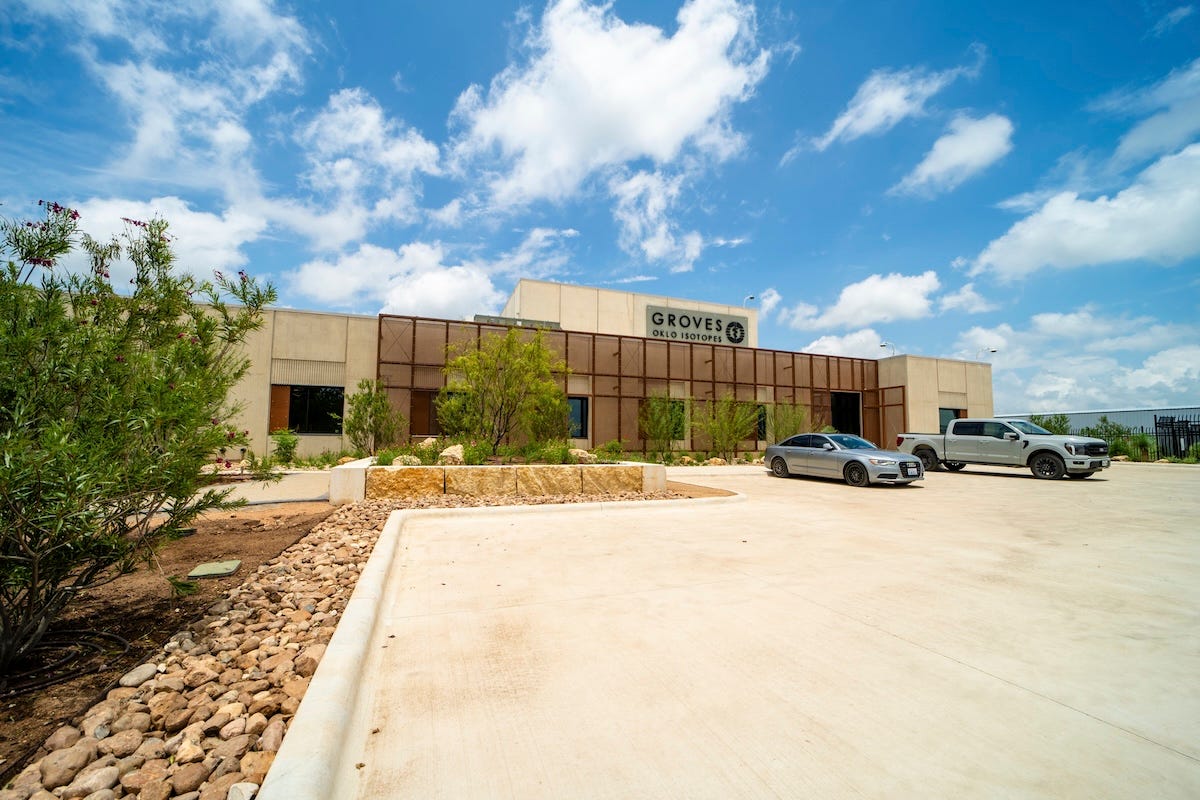
The most recent criticality was at Oklo’s Groves reactor, which is not intended to produce energy, but instead manufacture isotopes. It is unpressurized, with the fuel sitting at the bottom of a deep pool of water that provides shielding and moderates the speed of the neutrons released during fission, so that they are more likely to transmute target atoms.
Oklo says that the various steps involved in bringing the reactor to initial criticality, including selecting vendors and building a safety case, are a good rehearsal for its main goal of building small power reactors. “Reaching criticality in less than a year is an incredible milestone for our team,” said Jacob DeWitte, co-founder and CEO of Oklo, in a statement. Groves is the first step in building isotope producers that will make materials useful in cancer treatment, manufacturing, space exploration, and other scientific research. The U.S. is not self-sufficient in isotopes.
“Groves demonstrates that the domestic nuclear industry can once again move from design through construction, authorization, and startup on timelines that are measured in months rather than years when developers, suppliers, and regulators work together on an integrated deployment approach,” the company said.
The most common type of pool reactor in the United States is the TRIGA research reactor, which is a staple of university nuclear engineering departments. TRIGAs are regulated by the NRC. They usually take years to build and license, even though they only operate in pulses, not continuously. The Groves reactor, in contrast, was built under the Department of Energy’s Reactor Pilot Program (RPP).
The RPP, which was created in response to Executive Order 14301, announced a year ago that it had selected 11 advanced reactor projects, with a goal of having at least three reach initial criticality by July 4, 2026. Four ended up doing so.
Antares Nuclear’s Mark-0 reached initial criticality on June 4, the first to do so under the program. It is a microreactor design, with heat pipes that bring heat energy from the core for direct conversion into electricity. It uses high-assay low-enriched uranium (HALEU) fuel in tri-structural isotropic form. The U.S. military is a likely customer.
Valar Atomics’ Ward 250 reactor followed soon after. It also uses tri-structural isotropic fuel but is cooled by helium. It was built under the RPP at the Utah San Rafael Energy Lab rather than at a national laboratory–the first DOE authorized reactor to do so. Its commercial product is intended to produce 100 to 250 kilowatts, and to be transportable, meaning that it can be shut down and left to cool for a few days, and then moved.
Deployable Energy’s Unity Nuclear Battery demonstration reactor came next, a one-megawatt transportable microreactor running on low-enriched uranium, with a helium coolant. The reactor uses “non-exotic materials and processes,” the company says. It is intended as a replacement for diesel generators, among other uses, and will run for five years without refueling.
And just meeting the July 4 deadline, Aalo Atomics started up a sodium-cooled reactor at the Idaho National Laboratory. Aalo had broken ground on the project just after the program announcement eight months earlier. “The hardest problem in nuclear was never the physics, our country simply forgot how to build,” Yasir Arafat, the president and chief technical officer, told World Nuclear News. The core is capable of making enough heat to produce 10 megawatts of electricity, the company said, and the reactor is designed to be deployed in clusters of five. Aalo’s intention is to mass-produce the reactors on an assembly line, for data centers. It says it will begin supplying commercial electricity next year.
Five criticalities in only a few months has little precedent in this country. During the wave of construction that produced the current nuclear fleet, the banner year of 1974, 14 reactors got low-power licenses. The comparison is not perfect because those were full-scale reactors rated in the hundreds or thousands of megawatts, while the initial criticalities being recorded now are mostly in the category of lab experiments, although they are useful steps for commercial reactors. And they are of radically different designs.
These pilot reactors, Groves included, are remarkable for having reached initial criticality in less than a year since groundbreaking. The initial demonstration still leaves these developers with huge tasks, like equipment to convert heat to electricity, among others.
Enjoy Your Summer Break, Congress
The House and Senate have gone home for the summer, but will return for about three weeks of work in September, and a few days in October. Congress has a lot of work on its plate, some of it nuclear. On the nuclear front, Congress has multiple topics on its plate with bipartisan support spanning licensing, financing, tax credits, and more.
Before recess, the House Energy and Commerce Committee’s Subcommittee on Energy approved six nuclear bills that would revise NRC licensing and DOE nuclear reporting, forwarding them to the full committee: H.R. 3978, Nuclear REFUEL (Recycling Efficient Fuels Utilizing Expedited Licensing) Act; H.R. 9612, American Enrichment Deployment Act; H.R. 5549, Efficient Nuclear Licensing Hearings Act; H.R. 9613, Nuclear Advisory Committee Reform Act; H.R. 9614, NRC Staff Pay Alignment Act; and H.R. 9084, Department of Energy Nuclear Transparency Act.
In April, also in the House, the Nuclear Rate Stabilization Act was introduced to modify tax rules for nuclear projects, allowing projects to opt out of the Investment Tax Credit normalization rule. This could have direct effects in lowering consumer rates in the near term instead of stretching tax credits over 40 years.
On the Senate side, there are multiple bills as well. Right before recess, Senators Kelly and Lummis introduced the Modernizing Outdated Regulations to Expand (MORE) American Fuel Act, the Senate companion to the American Enrichment Deployment Act. It would let applicants start building uranium enrichment plants before the NRC issues an operating license. The NRC would still have licensing authority, and the plant would still have to go through environmental review.
Building more enrichment capacity is important because the complete ban on using enrichment services from Russia takes effect in 2028, and demand for higher enrichment is growing because many advanced reactors require HALEU fuel.
The Foundational Infrastructure for Responsible Use of Small Modular Reactor Technology (FIRST) Act, introduced by Senators Budd and Coons, would codify the State Department’s existing FIRST program. The State Department calls FIRST a “capacity-building program,” that allows countries with rapidly-growing energy demand move into the nuclear field with “the highest international standards for nuclear safety, security, and nonproliferation.” It is also a strategy for favoring American reactors over those from Russia or China.
In May, Senators Lummis and Kelly introduced the Build Nuclear with Local Materials Act. It would require the NRC to allow the use of commercial-grade steel and concrete in structures that are not safety-related.
And there is more on deck. Policy conversations on nuclear financing will likely continue this fall. Congress may revisit conversations about nuclear waste policy, on items like the nuclear waste fund, moving away from Yucca Mountain, and revising the Nuclear Waste Policy Act, which could begin as soon as this fall. Similar proposals were made as recently as last year. Tackling nuclear waste policy questions are essential to making the Trump Administration’s ambitions on the Nuclear Lifecycle Innovation Campuses achievable.
It is not clear how much Congress will accomplish before November elections, or in the “lame duck” session that will follow, when many legislators know they will not be returning to Capitol Hill. But having a bill make some progress in this session may give it a head-start when re-introduced in the next session.
Governor of California Punts on Nuclear
Gavin Newsom, who is preparing to run for president, said last week in response to a question about continued operation of the Diablo Canyon nuclear plant that he would not work to extend operations beyond 2030. Newsom and the legislature had sought to block the plant’s license renewal but then reversed course when it became obvious that California needed the electricity. There is still considerable opposition to nuclear energy in the state.
A decision beyond 2030 “will be the baton I pass on to the next administration,” he said. Nationally, opposition to Diablo would win Newsom the support of some Democrats and the enmity of others.
In April, Governor Newsom said he welcomed the NRC’s approval of license extensions for the twin reactors.
Get Ready for Abundance
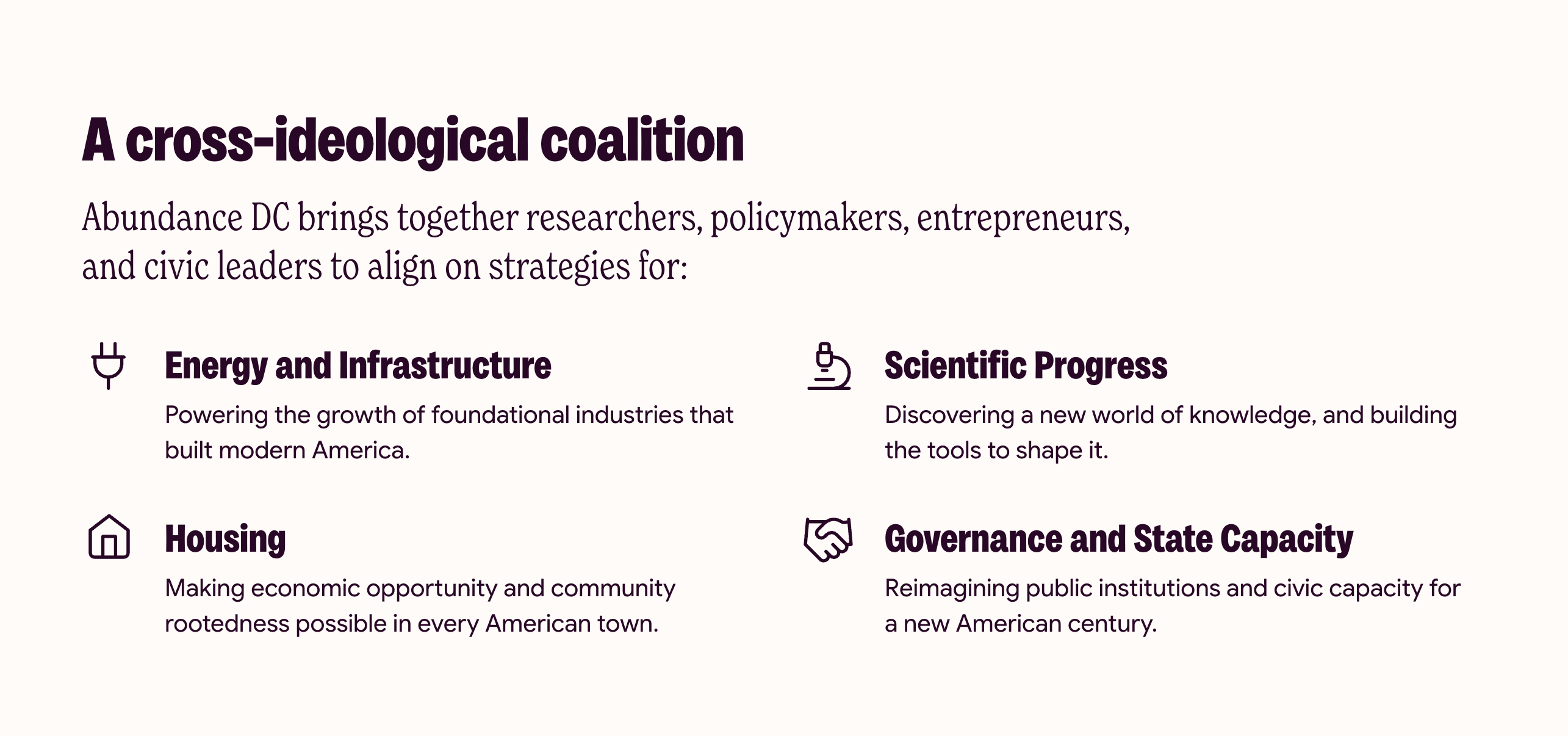
The yearly convening of policymakers, technologists, and builders will be held on December 10 & 11 in Washington, DC, and tickets go on sale on August 18th. The Abundance coalition is cross-ideological and based on the premise that America can and should build more, including more housing, more energy, more infrastructure, and more opportunity.
The event is produced by the Breakthrough Institute and the Niskanen Center.
Correction: Last week this newsletter misidentified the Gulf of Mexico Research Initiative as the company that is providing SuperCritical Materials with an oil platform to test its system for harvesting uranium from seawater. It is the Gulf Offshore Research Institute.
Thanks for reading!
I look forward to this weekly newsletter with its neutral reporting.
Maybe you could provide some deeper analysis on items such as Pele which people can refer to. Substack has its limitations so perhaps a link to a website where you are custodian. pages can be built up over time and be updated when required